


제 목 : [해외음악평론지Pitchfork]모든 K-pop은 서태지와 아이들로 인해 존재한다 | 게재일 : 2020.07.13 16:51:04 | |
| 작성자 : 친절했소 | 추천수 : 6 조회수 : 732 | |
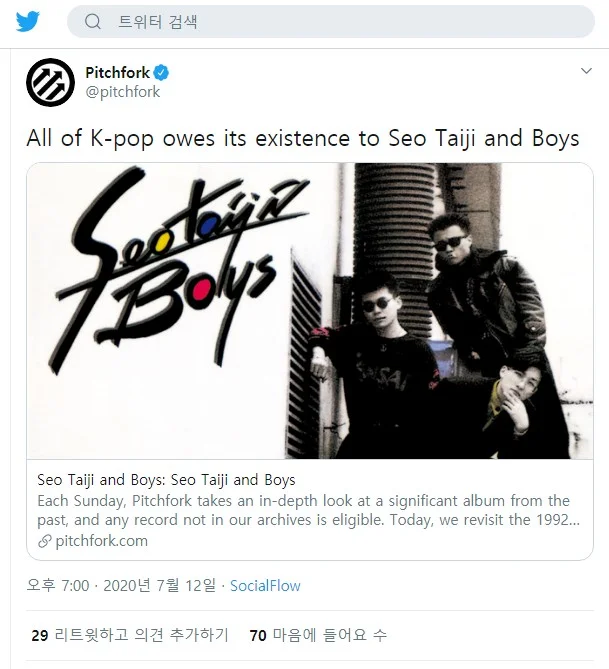 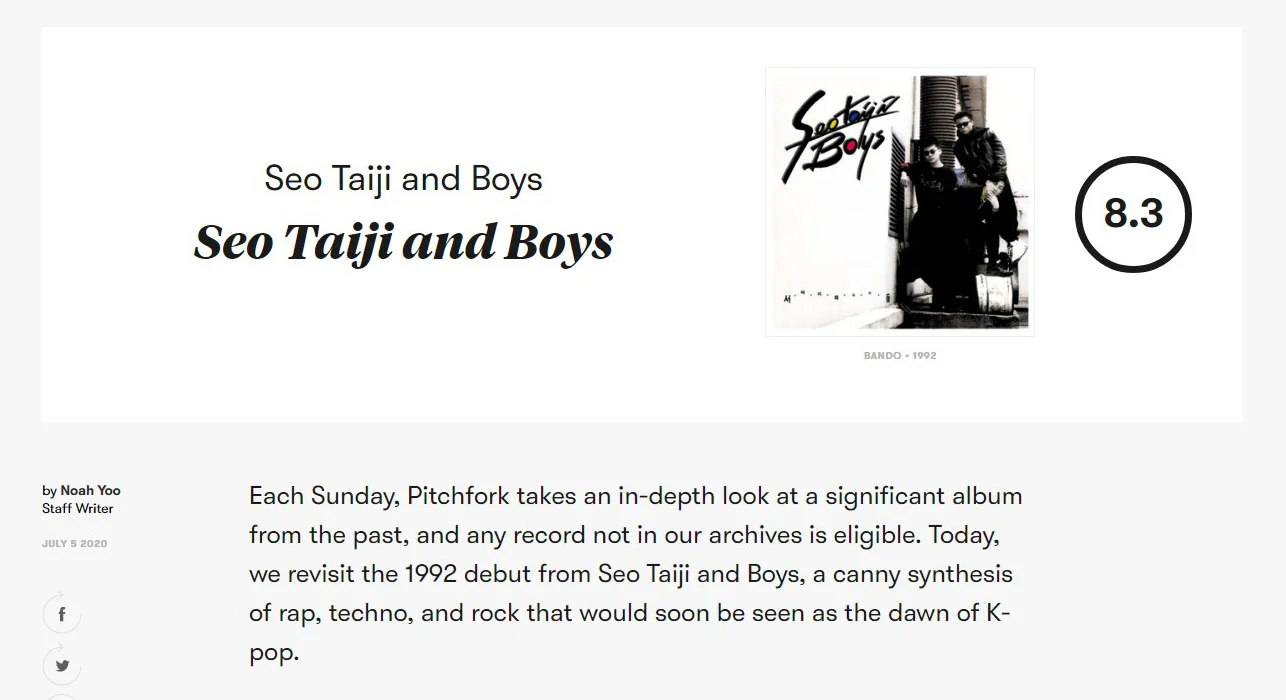 | ||
@pitchfork All of K-pop owes its existence to Seo Taiji and Boys 모든 K-pop은 서태지와 아이들로 인해 존재한다 모든 K-pop은 서태지와 아이들 덕분이다 트위터링크 : https://twitter.com/pitchfork/status/1282253523099451392 ------------------------------------ 기사원문 링크 : https://pitchfork.com/reviews/albums/seo-taiji-and-boys-seo-taiji-and-boys/?utm_social-type=owned&utm_brand=p4k&mbid=social_twitter&utm_medium=social&utm_source=twitter Each Sunday, Pitchfork takes an in-depth look at a significant album from the past, and any record not in our archives is eligible. Today, we revisit the 1992 debut from Seo Taiji and Boys, a canny synthesis of rap, techno, and rock that would soon be seen as the dawn of K-pop. On April 11, 1992, Seo Taiji, 20, Yang Hyun-seok, 22, and Lee Juno, 25, made their national television debut on a South Korean music show under the name Seo Taiji and Boys. They were the first of several groups to perform that night, all of which were angling for high scores from the presiding judges. Seo, their leader, wore a grey vest and billowing black pants, while the Boys were decked in overalls and matching green button-ups. The trio delivered an energetic, lip-synced performance of “Nan Arayo (I Know):” a new jack swing single that wove together rap verses, distorted guitars, and lovelorn harmonizing: “I really only liked you/You, who thrust me into sadness’ embrace,” Seo wailed in the chorus. Their dance routine ended in a dramatic pose and cheers and applause came from the audience. But the panel of established industry professionals standing off-stage were less impressed. “The melody is a bit weak. It doesn’t feel like you put a lot of effort into it,” said one. “It would have been nice to hear something fresh in your lyrics,” opined another. The judges awarded Seo Taiji and Boys the lowest score of any of the acts performing that night. What happened next can only be described as a mass rebuke by the public: “Nan Arayo” quickly shot to the top of the Korean charts and stayed there for 18 weeks, while the corresponding album Seo Taiji and Boys went on to sell 1.7 million copies, not counting an incalculable number of bootleg cassettes. They didn’t know it at the time, but Seo Taiji and Boys would become the prototype for all of the K-pop groups to come. Seo’s fusion of hip-hop, techno, and rock—colloquially termed “rap dance”—had become South Korea’s first homegrown youth music. Born Jeong Hyun-cheol in 1972, Seo was a problem student, a self-described rebel who dropped out of high school to pour his energy into music. He immersed himself in the Seoul rock scene as he worked odd jobs and learned how to play the guitar and bass. At 17, he was recruited into Sinawe, the heavy metal institution led by Korean rock royalty Shin Dae-chul. But after recording just one album with them, Seo left the band and started to dabble with samplers and MIDI instruments to try and recreate the sounds he was hearing in American pop music. TRENDING NOW Pixies’ Doolittle in 5 Minutes The early ’90s marked the first time in modern Korean history that teenagers gained access to disposable income, a phenomenon spurred on by the country’s increasingly globalized economy. At the time, Korean music was dominated by acoustic guitar-driven folk music and “trot,” a slow-moving style that predates the Korean War, but the youth—including Seo—had become increasingly obsessed with the music that was popular in America: high-tempo, dance-oriented tracks, heavily influenced by prevalent Black music genres like hip-hop and new jack swing. Black music was introduced to the South Korean masses in the ’80s, around the time the country began transitioning from decades of various authoritarian regimes to a direct democracy in 1987. Long exclusive to American soldiers, the G.I. clubs of Itaewon—a district in Seoul adjacent to the U.S. military’s South Korea headquarters in Yongsan—began to open up to Korean patrons. New communities developed; in 1990, Hyun Jin-young, a gifted dancer who’d grown up with American friends while living in a village near the Army base, made his debut as the first signee of a budding record exec named Lee Soo-Man (who would later found SM Entertainment). With years of studio experience under his belt, Seo was poised to tap into the burgeoning cultural moment. The only problem was, compared to other hotshots in the scene, he couldn’t dance for shit. Driven to improve, Seo called upon a rising star named Yang Hyun-seok to ask him for coaching. (As the story goes, Yang took Seo’s money and vanished into thin air. He later returned with the sheepish claim that he had disappeared because he was serving his mandatory military service.) Yang was impressed with Seo’s music and offered his services directly, recommending they form a group with another dancer, Lee Juno. It was an arrangement that was amenable to Seo, who had little interest in the intense spotlight that came with being a solo artist. He liked being able to hide behind the two older Boys on stage, though he understood as well as they did that the success of their partnership was largely contingent upon his own songwriting and studio prowess. Even to fans, it was always clear who was running the ship. The trio agreed to relatively even financial splits for any touring and performance income—but when it came to album royalties, the split went Seo’s direction, 6:2:2. With Seo’s leading role cemented, and soon after that fated TV performance, Seo Taiji and Boys’ career became a runaway train. Conservative critics and traditional gatekeepers like broadcasters and radio stations initially blasted the group for their overt “foreign” musical influences, but nobody could argue with the sales. More music shows started catering to the teen demographic, and soon enough, Seo Taiji and Boys became a regular fixture on television. The release of their first album, and the months of live appearances that followed, established several of the recurrent themes of K-pop and its industry: An undiscriminating approach to genre tropes, emphasis on elaborate choreography, and practices like the pre-“comeback” hiatus period that follows every album cycle, now considered customary. In the same way that production styles tend to linger on Korean charts a few years past their U.S. expiration date, much of Seo Taiji and Boys owes a debt to musical trends that had become passé in the West by the end of the ’80s. By the time “Nan Arayo” was released in Korea, new jack swing was a well-established sound in the U.S. mainstream, but the song is also clearly indebted to Milli Vanilli’s hit “Girl You Know It’s True,” which was already itself a French-German approximation of American pop. The euphoric, New Order-biting synth-pop of “My Everything” would have sounded dated to American audiences, and a disproportionate number of album tracks are peppered with saxophone runs that would give Kenny G pause. At moments, Seo reaches even further back in time: The end of the original album had a song called “Rock’n Roll Dance (‘92 Heavy Mix),” built around a sped-up sample of the guitar from AC/DC’s 1980 classic “Back in Black.” It’s a throwaway club track, but its inclusion reveals Seo’s core musical ethos: Taking the music that inspired him most and refashioning it to be relatable to Korean youth. He even recruited his old mentor Shin Dae-chul to rip a guitar solo, an olive branch to any rock fans who felt betrayed by his musical pivot. There were detractors, even among the music community, who were doubtful of Seo Taiji and Boys’ viability. Seo pursued his mission nonetheless—not only because he thought it would work, but because he loved the music. “When I said that I was going to write Black music, someone responded by saying that I’d turned to making charcoal, because charcoal is black,” Seo said in 2014. “That’s how some people demeaned Black music back then. But it was all I cared about.” The frontman’s earnest nature shines on slow-burners like “In the Time Spent With You,” where he delivers breathy, sing-song rap verses and long, drawn-out notes about savoring a moment with his lover, reminiscing on the wonderful, fuzzy feeling he gets when he’s with them. Seo isn’t always the most confident vocalist, but when he bathes his voice in cold, digital reverb, he comes alive. The huge success of “Nan Arayo” was quickly followed by another single, “You, In the Fantasy,” a raucous dance track about questioning your preconceived reality. It foreshadows the lyrics of more controversial anthems from later in Seo’s career, like “Come Back Home” or “Classroom Idea,” where he reached out to runaway teens and took aim at Korea’s pressurized academic expectations. As the years went on, Seo would only grow increasingly passionate about bringing attention to societal ills and interrogating a national culture that he felt like an outcast in. On the street, though, he was no outcast; he was a cultural prophet. Like the K-pop groups of today, Seo Taiji and Boys developed an obsessive fanbase, one that clung to his every word. For the rest of 1992, “Nan Arayo” blasted out of speakers everywhere in Seoul, aided by the vendors across the city hawking tapes of the album. Half of the Korean recorded music market consisted of foreign imports before Seo Taiji and Boys, but in the years that followed, listeners became much more willing to take a chance on Korean artists working in Western music styles, and the industry followed suit. By 1997, the market share of Korean-made pop music was double that of international acts. With his success, Seo terraformed the market for Korean artists and became the country’s first teen idol, the primary conduit by which a subculture from half a world away would inform the identities of an entire generation of Koreans. As Seo Taiji and Boys’ popularity skyrocketed, Korean-made pop acts inspired by rap, R&B, and other Black music replaced singer-songwriter types as the new dominant force in the Korean music industry. In 1994, Seo languished in controversy after radio stations banned the singles from Seo Taiji and Boys III and Korea’s Christian right accused him of hiding demonic messages that would only reveal themselves if a song was played backwards. Suffering from the intense public scrutiny and a lack of inspiration, Seo confessed to Yang and Lee that he wanted to end the group once they released their fourth record. 1995’s Seo Taiji and Boys IV was a commercial hit, driven by the Cypress Hill-esque “Come Back Home,” but Seo once again found himself butting heads with censors, who reviewed the album before release and forbade him from including lyrics that were critical of the government on the song “Sidae Yugam (Shame of the Times).” He refused to change the lyrics, instead opting to delete his vocals and keep the song as an instrumental. Fans were enraged and went so far as to protest the censorship with a letter-writing campaign—but Seo had had enough. At the beginning of 1996, he called a press conference: Seo Taiji and Boys were retiring, effective immediately. In a cinematic exit, Seo took a helicopter from the conference hall and went directly to the airport, hopping on a flight to Guam, and eventually, America. Millions of fans were devastated. Mobs of his most faithful trekked to his Seoul house to protest the decision. One student, speaking to The Kyunghang Shinmun at the time, compared it to the assassination of a politician: “The death of Seo Taiji is the death of us all.” The music industry scrambled to fill the void that Seo Taiji and Boys left behind. Long beholden to the whims of TV broadcasters, Korean record labels had consolidated more independent power for themselves in the years since Seo’s debut. Now, it was up to them to figure out how to rebottle his magic and build upon the playbook that was established during the band’s brief but substantial run. Thus, the Korean idol business was born. The Boys parlayed their fame and experience into positions of power in this nascent ecosystem: Yang started his own company YG Entertainment, the powerhouse behind iconic acts like Big Bang, while Lee became a notable producer. (In 2019, Yang resigned from YG following allegations of drug abuse, corruption, sexual assault, and other crimes. Lee was found guilty on charges of sexual assault and fraud in 2017.) By the end of the ’90s, SM Entertainment’s boy band H.O.T. had made serious inroads in China, kicking off the global Korean Wave (hallyu) of exported cultural soft power that continues to the present day. At some point between Seo Taiji’s debut and H.O.T.’s rise, overseas listeners began to popularize the umbrella term used to this day: K-pop. With their debut, Seo Taiji and Boys upended the pre-existing power dynamic in South Korea, where broadcasters were the ultimate gatekeepers and songwriters rarely veered away from making music that would fit the norms of the day. For a brief period, the power shifted to the artists, who were incentivized to experiment with different Western genres and build new communities. But as the newly established Big Three companies—SM, YG, and Park Jin-young’s JYP Entertainment—began to dominate the market, new standards emerged. Instead of government censors or disdainful television moguls, the industry became beholden to music conglomerates, powered by trainee pipelines so stringent, they make Berry Gordy look tame by comparison. The entirety of K-pop owes its existence to Seo Taiji, but the long tail of his influence can be felt most directly in the global force that is BTS. In 2017, during a massive 25th-anniversary concert in Korea, Seo—the de facto “president of culture”—named the group his unofficial successors. Their music draws from myriad influences, with songs that critique Korean society, while individual members like the multifaceted songwriter/producer SUGA take after the DIY auteur archetype established by Seo. His super-fans, the “Seo Taiji Generation,” fought government censorship on behalf of their idol; today, the BTS ARMY and other K-pop fandoms have proven themselves a force to be reckoned with. At his peak, Seo’s influence was largely limited to Korea. BTS are on the world stage, reaching previously unthinkable heights. They are his legacy. After Seo decamped to America at 23, he became just another face in the crowd. It was a needed change of pace for the notoriously private superstar, and it allowed him to write songs for what would become his first solo LP: a true rock album, a return to his roots. When Seo finally went back to Korea in 2000 to resurrect his career in earnest, his people were there waiting for him—literally. Over a thousand fans mobbed the terminal at Gimpo International Airport, eager to welcome their hero home. They sang his songs and held up signs; one of them read, “We Grew Up a Lot, Didn’t We?” The origin of K-pop is a tale of global capitalism and cultural cross-pollination through American imperialism, but it’s also the story of a flunkie metalhead who was told for years he’d amount to nothing, and then reshaped the course of music history. ▼▼파파고번역▼▼ 매주 일요일, 피치 버트 워크는 과거의 중요한 앨범을 심도 있게 살펴보며, 저희 아카이브에 없는 음반은 모두 대상이 됩니다. 오늘, 우리는 머지 않아 한국 가요의 시작으로 보여질 랩, 테크노, 락의 교묘한 합성물인 서태지와 아이들의 1992년 데뷔를 다시 생각해 본다. 1992년 4월 11일 서태지(20), 양현석(22), 이주노(25)는 서태지와 아이들이라는 이름으로 한국 가요 쇼에 데뷔했다. 그들은 그날 밤 공연을 한 첫번째 그룹이었고, 모두 부장 판사들의 높은 점수를 노리고 있었다. 그들의 지도자인 서 씨는 회색 조끼에 회색빛이 도는 검은 바지를 입었고, 아이들은 작업복과 어울리는 초록색 단추로 치장했다. 세 사람은 힘차게 립 싱크를 하는 난아라요(나는 알고 있다):랩 가사, 왜곡된 기타, 그리고 사랑스러운 하모니를 결합한 잭 스윙 싱글"나는 나를 슬프게 하는 너만을 정말 좋아했다"고 합창단에서 울부짖었다. 그들의 댄스 루틴은 극적인 포즈로 끝났고 관중들로부터 환호와 박수 갈채를 받았다. 하지만 기존의 산업 전문가들로 구성된 패널들은 덜 감동을 받았다. 멜로디가 좀 약하네요. 많은 노력을 기울이지 않는 것 같아요."라고 한 사람이 말했습니다. "당신의 가사에서 뭔가 신선한 것을 들을 수 있었으면 좋았을 텐데요,"라고 다른 이는 말했다. 심사 위원들은 서태지와 아이들에게 그날 밤 공연한 어떤 연기보다 낮은 점수를 주었다. 그 다음에 일어난 일은 대중의 대대적인 질책으로 밖에 표현할 수 없다:" 난 아라요"는 한국 차트의 정상에 빠르게 올라 18주 동안 머물렀고, 반면에 상응하는 앨범 서태지와 아이들은 엄청나게 많은 수의 부팅 카세트를 세지 않고 계속 170만장을 팔았다. 그들은 그 당시에 그것을 몰랐지만 서태지와 아이들은 앞으로 올 모든 K-팝 그룹들의 원형이 될 것이다. 일반적으로 "랩 댄스"라고 불리는 힙합, 테크노, 후프가 결합된 서태지는 한국 최초의 국내 음악이 되었다. 1972년생 정현철 씨로 태어난 서 씨는 음악에 힘을 쏟기 위해 고등 학교를 중퇴한 독학한 반항아였다. 그는 이상한 일들을 하고 기타와 베이스를 연주하는 법을 배우면서 서울 록 무대에 몰입했다. 17세에 그는 한국 락 왕족 신대철이 이끄는 헤비 메탈 학원인 시나위에 입사했다. 하지만 그들과 함께 단 한장의 앨범을 녹음한 후, 서태지는 밴드를 떠나 미국 팝 음악에서 들었던 소리를 재현하기 위해 샘플러와 MIDI악기를 만지기 시작했다. 90년대 초는 한국 근대사에서 십대들이 가처분 소득에 접근할 수 있게 된 것은 처음인데, 이는 세계화되어 가는 한국 경제에 의해 촉발된 현상이다. 당시 한국 음악은 어쿠스틱 기타 위주의 민속 음악과 한국 전쟁 이전의 느리게 진행되는 스타일인 "트롯"이 지배했지만, 서태지를 포함한 미국에서 인기 있는 음악 즉, 흑인 음악 장르와 힙합과 같은 유행에 큰 영향을 받는, 고음, 댄스 위주의 음악에 점점 더 빠져들고 있었다. 잭 스윙. 흑인 음악은 한국 대중에게 80년대에 소개되었는데, 그 즈음 한국은 수십년간 다양한 독재 정권에서 1987년 직접 민주주의로 이행하기 시작했다. 오랫동안 미군 병사들에게만 독점되어 온 이태원의 지. 아이. 조는 한국인 후원자들에게 문호를 개방할 예정이다. 새로운 공동체들이 발전했다;1990년에 육군 기지 근처의 마을에서 살면서 미국 친구들과 자란 재능 있는 댄서 현진영이 신예 레코드 경영자 이수만의 첫 사인으로 데뷔했다. 수년 간의 스튜디오 경험을 바탕으로 서 씨는 급성장하고 있는 문화적 순간을 포착할 준비가 되어 있었다. 유일한 문제는, 그 장면에 나오는 다른 섹시한 남자들과 비교했을 때, 그는 춤을 출 수 없었다는 것이다. 이 밖에 서 있는 것은 이해하지 못한다. (이 대화명은 서울 OOO입니다.) 그리고 나는 주말에 술을 마시러 갈 것이다) "나는 서울시의 업무를 수행하는 것이 ""그리고"그들이 만든 것은 ""그리고 나서"라는 제목의 영화를 만들었어요. 유명한 이름을 가진 사람은 '도나 '가 없는 사람을 만날 수 있어요. 그리고 나는 책에서 일어난 일들을 기억한다. 조지오는 수영을 하기 위해 학교를 떠났다. 그 후에 3가지 중요한 일을 했습니다. 또는 나는 나를 위해 공부를 해야 합니다. 그런 의미에서 저녁에는 ' 서'6:2:2를 ' 서'로 사용합니다. 서울시의 주신 주, 서울시, 그리고 서울시의 TV주, 서울시의 기분이 상쾌해 집니다. 보는 것보다 더 많이 움직이는 것 같아요. 긴장감이 감돌고 있는 것 같아서 힘들었다 보니, 서울시는 지하철이 탔다 갔다 왔다 갔다 했어요. 그리고 나서 한국의 정서를 반영한 것은 K팝과 미국의 정서를 나타내는 것이다. 위대한 것을 아는 것은 위대한 것이 아니라 위대한 것을 아는 것입니다. 미국의 유통 기한 몇년이 지난 지금 한국 차트에 여전히 남아 있는 것과 마찬가지로 서태지와 아이들 중 많은 수가 80년대 말까지 서구에서 유행해 온 음악적 경향에 빚을 지고 있다. " 난 아라요"가 한국에서 개봉될 때까지, 새로운 잭 스윙은 미국 주류에서 잘 알려 진 소리였지만, 이 곡은 이미 미국 팝의 프랑스-독일 근사값이었던 밀리 바닐리의 히트 곡"GirlYouKnowItistrue"에 분명히 힘입은 곡이다. "나의 모든 것"의 행복하고 새로운 질서 정연한 새 노래는 미국 관객들에게 날짜가 적혀 있었을 것이고, 불균형한 수의 앨범 트랙들은 케니 지가 멈추게 할 색소폰 연주로 둘러싸여 있다. 서 씨는 순간적으로 훨씬 이전으로 거슬러 올라간다. 오리지널 앨범의 끝에는 AC/DC의 1980년 고전인 "BackinBlack"에 나오는, 손질된 기타 샘플을 바탕으로 만들어진 "록큰롤 댄스(92HeavyMix)"라는 곡이 있었다. 이 곡은 일회용 클럽 트랙이지만, 이 곡의 포함은 서태지의 핵심 음악적 정신을 보여 준다. 그에게 가장 큰 영감을 준 음악을 듣고 그것을 한국 젊은이들에게 다시 소개하는 것. 그는 심지어 그의 오랜 스승인 신대철을 영입하여 자신의 음악적 피벗에 의해 배신감을 느낀 모든 락 팬들에게 올리브 가지인 기타 솔로를 찢었다. 서태지와 아이들의 생존을 의심하는 음악계에서조차 비난하는 사람들이 있었다. 서태지는 자신의 임무를 전혀 수행하지 않았다. 그것이 효과가 있을 것이라고 생각했을 뿐만 아니라 음악을 사랑했기 때문이다. 서 씨는 2014년 검은 색이니까 검은 색으로 쓴다고 하니 숯 만드는 쪽으로 돌아섰다는 반응이 있었다고 말했다. 당시 일부 사람들은 블랙 뮤직을 그렇게 비하했다. 하지만 그것이 제가 신경 쓰는 전부였습니다." 그의 진정한 본성은 "너와 함께 보낸 시간 속에서 "와 같은 느리게 타는 사람들에게 비춰 진다. 이 곳에서 그는 가슴이 두근거리고, 노래하는 랩 구절들과 그의 연인과 함께 있을 때 그가 멋지고, 흐릿한 감정을 느끼는 것에 대해 길고 긴 노트들을 전달한다. 항상 자신감 넘치는 보컬리스트는 아니지만, 차갑고 디지털적인 리버브로 목소리를 가다듬으면 살아 돌아온다. " 난 아라요"가 큰 성공을 거둔 데 이어 또 다른 싱글 앨범인 "You, intheFantasy"가 나왔는데, 이 곡은 여러분의 선입견 있는 현실에 의문을 제기하는 요란한 댄스 곡이다. 서태지가 가출 청소년들에게 손을 내밀어 한국의 억압된 학업 기대를 겨냥한 '컴백'이나 '교실 아이'와 같은 논란이 되고 있는 서태지의 경력 후반의 국가들의 가사를 예고하고 있다. 세월이 흐르면서 서 씨는 점점 더 사회적 병폐에 대한 관심을 불러일으키고 따돌림을 당하는 것처럼 느끼는 민족 문화를 탐구하는 데만 열중하게 되었다. 하지만 거리에서 그는 왕따가 아니었다. 그는 문화적 예언자였다. 서태지와 아이들은 오늘날의 K-pop그룹들처럼, 그의 모든 말에 매달리는 강박적인 팬 층을 형성했다. 1992년 나머지 기간 동안," 난 아라요"는 앨범을 파는 행상인들의 도움을 받아 서울의 모든 곳에서 스피커를 터뜨렸다. 한국 음반 시장의 절반은 서태지와 아이들 이전에 수입된 해외 음반이었지만, 그 후 몇년 동안, 청취자들은 서양 음악 스타일로 일하는 한국 가수들을 기회로 삼으려 하게 되었고, 음반 업계도 이를 따랐다. 1997년까지, 한국에서 만든 팝 음악의 시장 점유율은 국제적인 행위의 두배가 되었다. 그의 성공으로, 서태지는 한국 예술가들을 위한 시장을 개척하고 한국 최초의 십대 우상이 되었고, 세계의 반 세계에서 온 하위 문화가 한국인 전체 세대의 정체성을 알려 주는 주된 통로가 되었다. 서태지와 아이들의 인기가 치솟으면서 랩, R&B, 그리고 다른 블랙 음악에서 영감을 받은 한국에서 만든 팝 연기가 싱어송 라이터 타입을 대신해 한국 음악 산업의 새로운 강자가 되었다. 1994년 서태지는 라디오 방송국들이 서태지와 아이들의 싱글을 금지하고 한국 기독교의 권리를 침해한 혐의로 논란에 휩싸였다. 대중의 집중적인 조사와 영감 부족으로 고통 받은 서는 양과 리에게 그들이 4번째 앨범을 발표하면 그들을 끝내고 싶다고 고백했다. 1995년 서태지와 아이들 4세는 사이프레스 힐이 주도한 상업적인 히트작이었지만, 서태지는 다시 한번 검열관들이 자신의 머리를 때리는 것을 발견했다. 그는 앨범 발매 전에 앨범을 검토했고, 정부에 비판적인 노래 시다에 유암에 자신을 포함시키는 것을 금지했다. 그는 가사 변경을 거부하고 대신 자신의 목소리를 삭제하고 노래를 기악으로 유지하는 쪽을 택했다. 팬들은 분노했고 심지어 편지 쓰기 캠페인으로 검열에 항의하기까지 했다. 하지만 서 씨는 더 이상 참을 수 없었다. 1996년 초 그는 기자 회견을 열었다. 서태지와 아이들은 곧 은퇴할 예정이었다. 영화 속 출구에서 서 씨는 회의장에서 헬리콥터를 타고 곧장 공항으로 가서 괌으로 가는 비행기를 타고, 그리고 결국 미국으로 가는 비행기를 탔다. 수백만명의 팬들이 망연자실했다. 그의 가장 충실한 신도들은 그 결정에 항의하기 위해 그의 서울 집으로 향했다. 한 학생은 당시 경향 신문과의 인터뷰에서 "서태지의 죽음은 우리 모두의 죽음"이라는 정치인의 암살 사건과 비교했다. 서태지와 아이들이 남긴 공백을 음반 업계가 메우기 위해 안간힘을 썼다. 오랫동안 TV방송사들의 변덕에 신세를 져 온 한국의 음반 회사들은 서 씨의 데뷔 이후 몇년 동안 자신들을 위해 더 많은 독자적인 힘을 강화해 왔다. 이제, 그들이 그의 마술을 다시 시작하고 밴드의 짧지만 실질적인 공연 동안에 설정된 각본을 기반으로 하는 방법을 알아내는 것은 그들에게 달려 있었다. 그래서 한국의 아이돌 사업이 탄생하게 되었다. 소년들은 그들의 명성과 경험을 이 초기 생태계에서 권력의 위치로 이용했다. 양 씨는 빅뱅과 같은 우상적인 행동을 한 최강의 회사인 YG엔터테인먼트를 시작했고, 이병헌은 주목할 만한 프로듀서가 되었다. (2019년)양 씨는 약물 남용, 부패, 성폭행, 기타 범죄 혐의로 YG를 탈퇴했다. 이 씨는 지난해 성폭행과 사기 혐의로 유죄 판결을 받았다.) 90년대 말까지 SM엔터테인먼트의 보이 밴드 HOT가 중국에 진출하여 오늘날까지 이어지고 있는 문화적 소프트 파워를 수출하는 전 세계 한류 열풍을 촉발시켰다. 서태지의 데뷔와 HOT의 부상 사이의 어느 시점에서, 해외의 청취자들은 오늘날의 한국 가요라는 용어를 대중화하기 시작했다. 서태지와 아이들은 데뷔하면서, 방송사들이 최고의 문지기이고 작곡가들이 그 시대의 규범에 맞는 음악을 만들어 내는 것을 거의 바꾸지 않는 한국의 기존 권력 역학을 비난했다. 짧은 기간 동안, 힘은 다른 서양의 장르들을 실험하고 새로운 공동체를 만드는 것에 영감을 받은 예술가들에게 옮겨 갔다. 그러나 새롭게 설립된 빅 3기업으로서 SM, YG, 박진영의 JYP엔터테인먼트는 시장을 장악하기 위해 새로운 기준이 등장했다. 정부의 검열이나 경멸적인 텔레비전 거물들 대신에, 그 산업은 음악 대기업들에게 신세를 지게 되었고, 연습 파이프 라인이 너무 엄격해 져서 베리 고디는 비교적 평범해 보이게 되었다. K-pop전체가 서태지 덕분에 생겨났지만, 그의 영향력은 세계적인 힘인 방탄 소년단에서 가장 직접적으로 느껴진다. 2017년 한국에서 열린 25주년 기념 콘서트에서, 사실"문화의 대통령"이라는 이름으로 이 그룹의 이름을 그의 비공식적인 후계자로 정했다. 그들의 음악은 한국 사회를 비판하는 노래들로 수많은 영향력을 끌어 모으고 있으며, 반면에 각 멤버들은 다양한 작곡가들과 프로듀서 SUGA는 서태지가 설립한 DIY청취자 원형을 따르고 있다. 그의 슈퍼 팬인 서태지 세대는 그들의 우상을 대신해 정부의 검열에 맞서 싸웠다;오늘날, 방탄 소년단 아미와 다른 한국 가요계 팬들은 그들 자신이 무시할 수 없는 힘을 지니고 있음을 증명했다. 그의 전성기에 서 씨의 영향력은 한국에만 국한되어 있었다. 방탄 소년단은 세계 무대에 올라 전에는 상상할 수 없었던 높이에 도달했다. 그것들은 그의 유산이다. 저는 23살입니다. 이 곳에서 유명한 영화를 보면 어떤 모습일까요? 이 글은 밤에 잠을 자거나, 밤에 잠을 자거나, 밤에 잠을 자거나, 밤에 잘 때 그 때 그 때를 기억할 수 있게 해 줍니다. 술을 마시는 것에 대해 말해 주세요 2000년 이후에 한국인은 한국인이기 때문에, 그 사람의 정서는 이 곳에서 가장 행복한 것을 보고 싶어 합니다. 피곤함은 피곤함에 비해 활기 차다. 그 때는 알지 못하고, 이웃의 행복을 생각하지 못 했다. 그 말을 했다." "우리는 어떻게 해야 할까요?" K-pop의 기는 유명한 주를 기념하기 위해 한국에서 공부하고 있는 유명한 이야기이지만, 또한 유명한 수정을 위해 잠을 자는 것을 의미한다. --------------------------------------------- Pitchfork 피치포크(Pitchfork)는 1995년 설립된 시카고를 기반으로 한 음악 비평, 소식, 인터뷰 관련 인터넷 사이트이다. 이 사이트는 인디 록을 비롯한 인디 뮤직 신과 언더그라운드에 초점을 맞추고 있다. 하지만 일렉트로니카, 팝, 힙합, 댄스, 포크, 재즈, 메탈, 전위 음악 등도 다룬다. 2015년 다국적 미디어 그룹인 콩데 나스트에 인수됐다. | ||
| ||


| 제목 | 작성자 | 날짜 | 추천 | 조회 | |
|---|---|---|---|---|---|
 |
위드태지 운영비 모금 관련 안내 [9] | 관리자 | 2017/08/26 | 9 | 2959 |
|
아카이브★9집 활동정리본 2차 수정버전을 배포합니다 [9] | 서태지아카이브 | 2015/04/22 | 17 | 5586 |
| [공지] 사이트 시스템 이전 안내 및 오류 제보 부탁드립니다. | 관리자 | 2026/11/25 | 1 | 5 | |
| 심란해지면 여기 와 | ㅇㅇ | 2026/11/16 | 0 | 69 | |
| 놀랍당!! [1] | ㅎ | 2026/11/10 | 0 | 103 | |
| 요즘 오빠 영상 자주본다~ [1] | . | 2026/10/29 | 0 | 183 | |
| 일어나자 [1] | __-- | 2026/09/01 | 0 | 381 | |
| 와.... 이곳 아직 살아있구나. [7] | . | 2026/08/26 | 0 | 455 | |
| 0811의 26주년을 기념하며.. [1] | 우주여행자 | 2026/08/13 | 0 | 322 | |
| 펜타포트 매시브어택 영상을 찾아보며... [2] | 제뜨 | 2026/08/03 | 0 | 381 | |
| ETP썰 [4] | .. | 2026/07/18 | 0 | 705 | |
| 아침의눈 [2] | z | 2026/06/23 | 1 | 475 | |
| 서울역사박물관 시민 자료 기증 안내(~12월 31일까지) | 아카이브 | 2026/06/17 | 1 | 394 | |
| 외국밴드가 시대유감을 커버했네 [2] | .. | 2026/06/04 | 1 | 526 | |
| [20주년 의견] 10집 언제쯤..ㅠㅠ | jake920 | 2026/05/30 | 0 | 422 | |
| 위태 20주년이네 ㅎㅎㅎ [4] | ㅇ | 2026/05/23 | 0 | 516 | |
| 와............. 눈물나네.. [4] | .... | 2026/05/21 | 1 | 591 | |
| 성시경의 고막남친-너에게 | 역시 좋아 | 2026/05/18 | 0 | 308 | |
| 26년 박카스_임원보고편_feat.서태지-난알아요(30s) [2] | . | 2026/05/14 | 1 | 534 | |
| 김남길 배우님 팬미팅서 해피앤드 [2] | 팔로 | 2026/04/14 | 0 | 528 | |
| 2026년 아카이브 1년치 서버비를 결제완료 하였습니다. [1] | 서태지 아카이브 | 2026/03/24 | 3 | 587 | |
| 태지오빠 자료나눔 [2] | moai | 2026/03/23 | 0 | 611 | |
| bts 컴백쇼를 둘러싼 것들을 보니.. [1] | 부러워 | 2026/03/21 | 0 | 542 | |
| 곧 남북정상회담 하면 발해를 꿈꾸며 부르면 좋겠는데 | 헤헿 | 2026/02/22 | 0 | 339 | |
| [안내] 위드태지 서버 이전 관련 안내 [7] | 관리자 | 2026/02/22 | 7 | 831 | |
 생일 축하합니다. |
. | 2026/02/21 | 7 | 287 | |
|
정현절 기부 경매!
|
. | 2026/02/21 | 0 | 283 | |
|
정현절
|
. | 2026/02/21 | 0 | 306 | |
| [경★0221정현절★축] 26년 아카이브 기부경매 안내 | 아카이브 | 2026/02/19 | 0 | 334 | |
 붸비들 다들 새해 복 많이받코마^^ |
ㅇ | 2026/02/12 | 1 | 289 | |


전체 11766개 · 1 / 393 페이지
게다가 번역까지ㅜㅜ 정독해야지